Engine Problems, Fixes & Buying Tips
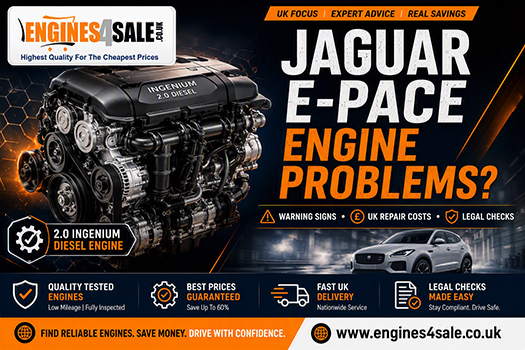
Jaguar E-Pace Engine Problems: 2.0 Ingenium Diesel Warning Signs, UK Costs and Legal Checks
The Jaguar E-Pace 2.0 Ingenium diesel can be a smart, capable compact SUV, but some owners face expensive problems when early warning signs are ignored. Cold-start rattles, unexplained coolant loss, repeated DPF warnings, rising oil levels and poor regeneration behaviour should never be treated as minor irritations. They can point to timing chain wear, EGR cooler issues, oil dilution or blocked emissions equipment.
Quick Summary for UK Jaguar E-Pace Owners
- Common concern areas include timing chain wear, EGR cooler leaks, oil dilution, DPF blockage and turbo wear.
- Typical UK replacement costs vary widely depending on whether the engine is used, rebuilt or fully reconditioned Jaguar engine.
- A metallic rattle from cold, coolant loss with no visible leak, white exhaust smoke or repeated DPF warnings should be investigated quickly.
- Use official government services to check vehicle recalls, MOT history and registration-detail requirements before buying or repairing.
Why the 2.0 Ingenium Diesel Can Become Expensive
The 2.0-litre Ingenium diesel was built to deliver low emissions, good economy and smooth everyday driving. In the E-Pace, however, short journeys, missed oil changes and delayed repairs can expose weak points faster than owners expect. The result is often a problem that starts with an unusual noise or warning light but becomes a major repair if the car is kept in use.
Timing Chain Rattle on Cold Start
The timing chain assembly is not easy to inspect because of its location, so owners often notice the sound before a technician confirms the fault. A brief metallic rattle immediately after a cold start may indicate chain stretch, guide wear or tensioner weakness. The danger is that the noise can disappear once oil pressure builds, making the fault easy to dismiss.
If the chain becomes loose enough to jump timing, internal engine damage can follow. Valves, pistons, camshafts and the cylinder head may all be affected. That is why a cold-start rattle should be treated as an inspection priority, not as normal diesel noise.
EGR Cooler Leaks, Coolant Loss and Recall Checks
A failing EGR cooler can allow coolant to enter the exhaust or intake path rather than leaking onto the ground. This means the expansion tank level may drop even when there is no puddle under the car. Warning signs can include sweet-smelling exhaust vapour, white smoke, overheating, coolant warnings or repeated top-ups.
Before committing to repairs or buying a used E-Pace, check the official GOV.UK vehicle recall service. It explains how to check whether a vehicle, part or accessory has been recalled because of a serious safety problem.
Oil Dilution, DPF Problems and Turbo Wear
Many diesel E-Pace problems become worse when the car is mainly used for short, low-speed journeys. The diesel particulate filter needs the right conditions to regenerate properly. If the cycle is interrupted repeatedly, unburnt fuel can contaminate the engine oil, reduce lubrication quality and increase wear.
Raised oil levels, a strong diesel smell in the oil, frequent running after short trips, DPF warnings and poor fuel economy should be investigated together. Ignoring the pattern can put extra strain on the turbocharger, timing components and emissions system.
Jaguar E-Pace Engine Replacement Cost in the UK
Engine replacement pricing depends on the condition of the existing unit, the parts included, labour time, warranty terms and whether related faults are repaired at the same time. A cheaper engine can become expensive if the timing chain, injectors, turbocharger, EGR system or DPF still need attention after fitting.
Used Engine
A used engine is usually the lowest upfront option, but it carries the highest uncertainty. Unless there is clear evidence of mileage, service history and previous repair work, the replacement may contain the same problems that damaged the original engine.
Reconditioned Engine
A properly reconditioned engine should include inspected or renewed wear components, clean oilways, correct timing components and a clear warranty. It normally costs more than a used unit, but it can reduce the risk of paying twice for the same labour.
Total Fitted Cost
As a practical guide, many UK owners should expect a fitted replacement engine job to run into several thousand pounds once labour, fluids, filters, seals, diagnostics and any emissions-system repairs are included. The final quote should clearly state what is supplied, what is rebuilt, what is reused and what the warranty covers.
Legal and MOT Checks After an Engine Replacement
If the replacement engine changes key vehicle details, the V5C may need to be updated. GOV.UK states that changes such as engine cylinder capacity and fuel type are among the details that must be correct on the registration certificate. Use the official DVLA engine details guidance before making or documenting any change.
You should also check the car’s MOT record before buying, selling or diagnosing long-term emissions faults. The GOV.UK MOT history service shows past MOT results, recorded mileage and failure reasons for eligible UK vehicles.
How to Protect the Engine Before Problems Escalate
Preventative maintenance is especially important on a diesel E-Pace. Use the correct low-SAPS oil specification, reduce oil-change intervals if the car is used mainly in town, investigate coolant loss promptly and allow regular longer drives so the DPF has a better chance of completing regeneration. Keep invoices, diagnostic reports and warranty paperwork because they can protect resale value and support any future claim.
When to Stop Driving and Book Diagnostics
Stop using the car and arrange inspection if you hear a sharp timing-chain rattle, see a red temperature warning, notice white smoke with coolant loss, find the oil level rising, or experience limp mode with repeated DPF warnings. Continuing to drive can turn a repairable issue into a full engine replacement.
When replacing a like-for-like diesel engine, your vehicle’s tax band and emissions classification remain unchanged. You must ensure the replacement engine has the correct emissions equipment fitted to pass an MOT.
Frequently Asked Questions
How long do Jaguar E-Pace 2.0 diesel engines last?
With careful servicing, correct oil and timely repairs, a 2.0 Ingenium diesel can cover high mileage. The risk rises when oil dilution, coolant loss, timing noise or DPF faults are ignored for long periods.
Is there an official recall for the Jaguar E-Pace EGR cooler?
Some vehicles may be affected by safety recall actions, depending on model, build period and VIN. Always use the official GOV.UK recall checker rather than relying on forum posts or adverts.
What does a failing timing chain sound like in an E-Pace?
It is usually described as a metallic rattle or clatter during the first few seconds after a cold start. If the sound becomes louder, lasts longer or appears with warning lights, the vehicle should be inspected quickly.
Can I replace the Jaguar E-Pace diesel engine with a petrol unit?
A diesel-to-petrol conversion would involve major mechanical, electrical, emissions and insurance complications. For most owners, a like-for-like replacement is the safer and more practical route.
How much does a Jaguar E-Pace engine replacement cost in the UK?
Costs vary by engine source, labour rate, warranty level and the number of related parts replaced. Ask for an itemised quote that separates the engine, labour, fluids, diagnostics, timing components and emissions-system repairs.


Categories
- Aston Martin
- Audi
- Auto News
- Auto Show
- Beijing auto show 2014
- Bentley
- BMW
- Bugatti
- Celebrity
- Chevrolet
- Citroen
- Classic Cars
- Dacia
- Engines
- Ferrari
- Ford
- General
- GM
- Google Car
- Guest Post
- Honda
- Hybrid Cars
- Hydrogen Fuel
- Hyundai
- Infographic
- Isuzu
- Iveco
- Jaguar
- Jeep
- KIA
- Lamborghini
- Land Rover
- Lexus
- Mazda
- McLaren
- Mercedes-Benz
- MINI
- Mitsubishi
- New Technology
- New York International Auto Show 2014
- Nissan
- Peugeot
- Porsche
- RAM
- Range Rover
- Recall
- Renault
- Rolls-Royce
- Saab
- Seat
- Skoda
- Smart
- Subaru
- Supercar
- Suzuki
- Toyota
- Uncategorized
- Vauxhall
- Volkswagen
- Volvo
- Wrong Fuel