1
Enter vehicle details
Use your registration or provide the make, model and engine information needed to identify a suitable replacement.
Need an engine after a breakdown or major engine failure? Compare quotes for used and reconditioned engines, supply only or supply and fit, with vehicle recovery available across mainland UK.
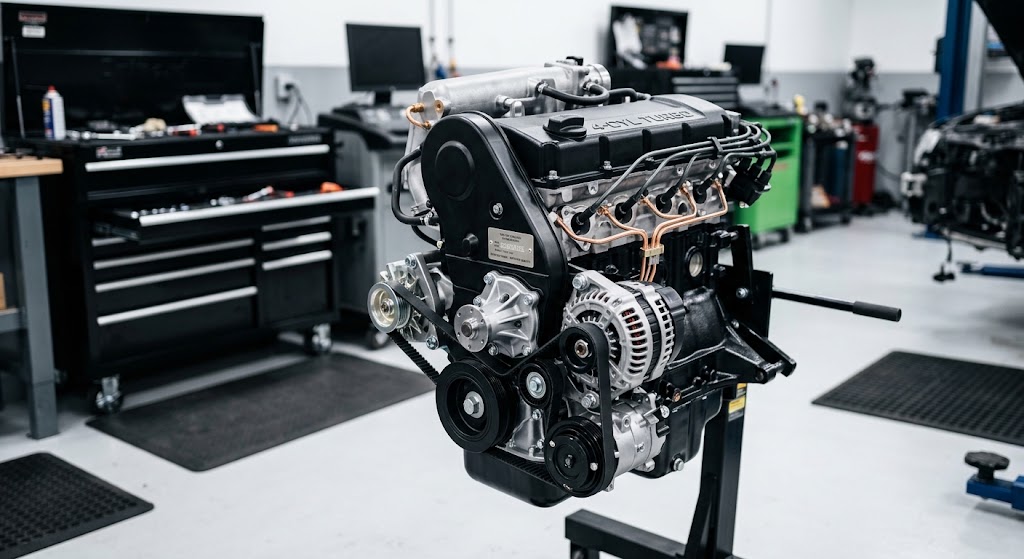
One enquiry can help you compare suitable engine supply and fitting options without contacting garages one by one.
Use your registration or provide the make, model and engine information needed to identify a suitable replacement.
Choose used or reconditioned, then tell us whether you need supply only, fitting or recovery.
Your enquiry can be matched with relevant suppliers and specialist garages with suitable options.
Compare price, engine condition, warranty and service details before deciding which option suits you.
The right choice depends on your vehicle, budget, how long you plan to keep it and what is currently available.
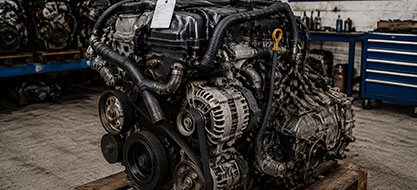
A practical lower-cost option when a compatible engine is available. Selected used engines may include warranty cover of up to 6 months.
Compare used engine quotes →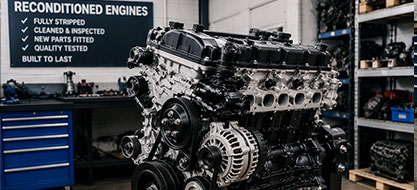
Suitable when you want a rebuilt engine option with greater long-term reassurance. Qualifying engines may include warranty cover up to 3 years.
Compare reconditioned quotes →Browse popular vehicle makes or use your registration above to find a compatible engine faster.
Quick answer: a reconditioned engine is a previously used engine that has been stripped, inspected, repaired and rebuilt so that it can return to service in a substantially improved condition. It is not simply a second-hand engine that has been cleaned and resold.
The quality of a reconditioned engine comes from the work carried out inside it. A good rebuild starts with a usable engine core. The engine is dismantled so the block, cylinder head, crankshaft, pistons, bearings, timing components and sealing surfaces can be assessed. Components that are excessively worn, damaged or outside acceptable tolerances are repaired or replaced before the engine is reassembled.
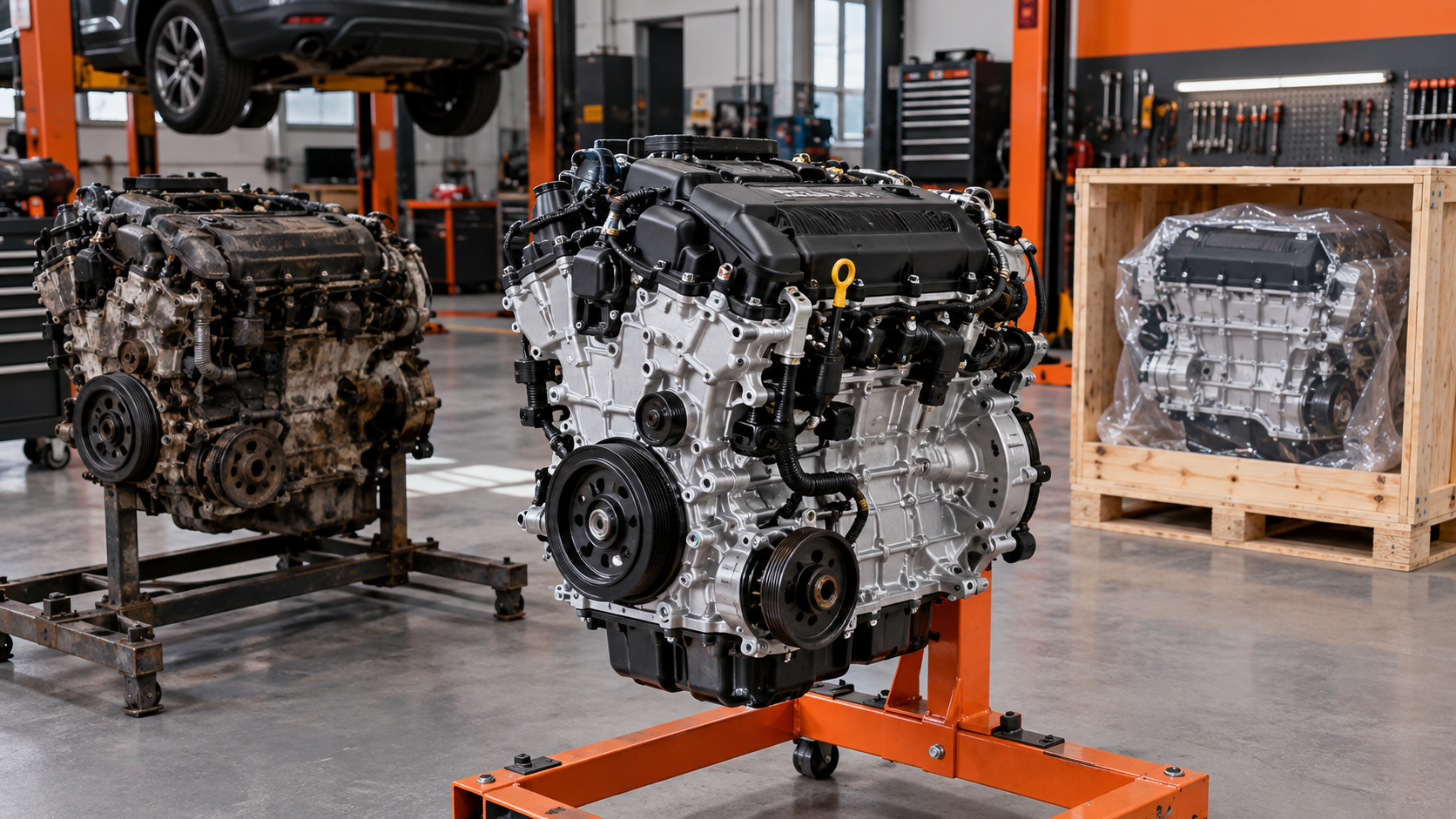
The exact meaning of “reconditioned” can vary across the UK market, which is why the description alone is not enough. One supplier may include machining work, new bearings, rings, seals, gaskets and timing parts. Another may carry out a narrower rebuild. A buyer should therefore compare the scope of the rebuild, not just the label attached to the engine.
| Option | What You Are Buying | Typical Strength | Main Risk / Trade-Off | Who It Suits |
|---|---|---|---|---|
| Used engine | An engine removed from another vehicle and sold largely in its existing condition. | Usually the lowest initial cost. | More uncertainty over previous wear, maintenance and remaining life. | Older vehicles and buyers prioritising budget. |
| Reconditioned engine | An existing engine that has been stripped, checked, rebuilt and refreshed. | Better balance of price, reliability and warranty potential. | Rebuild standards differ, so the detail behind the quote matters. | Drivers keeping the car and wanting a stronger long-term repair. |
| New engine | A brand-new manufacturer or OEM replacement. | Factory-new unit with no previous service life. | Usually the highest cost, sometimes difficult to justify on an older car. | Newer or high-value vehicles where budget is less restrictive. |
For many UK drivers, the reconditioned route is attractive because it can protect the value already invested in the vehicle. Instead of replacing the whole car because of one major mechanical failure, the owner can replace the engine with a rebuilt unit and continue using a vehicle they already know.

A reconditioned engine is rarely chosen because it is the cheapest possible option. It is usually chosen because the buyer wants the repair to make sense over the next few years, not just on the day the invoice is paid.
A £500 difference between two engine quotes can look important when viewed in isolation. But the full job can include vehicle recovery, delivery, labour, fluids, filters, gaskets, timing-related work, diagnostic checks and ancillary parts. The better value quote is therefore the one that gets the vehicle back on the road properly with fewer unknowns, not automatically the lowest engine-only number.
| Situation | Why Reconditioned Can Work Well |
|---|---|
| Family car in otherwise good condition | Extends useful vehicle life without the cost of replacing the whole car. |
| Van or work vehicle | Longer-term reliability and fast return to service can matter more than the cheapest purchase price. |
| Premium SUV or executive model | The vehicle's value can justify a deeper, better-quality repair. |
| Known engine family with recurring wear issues | A proper rebuild may address wear points that another unknown used engine could still carry. |
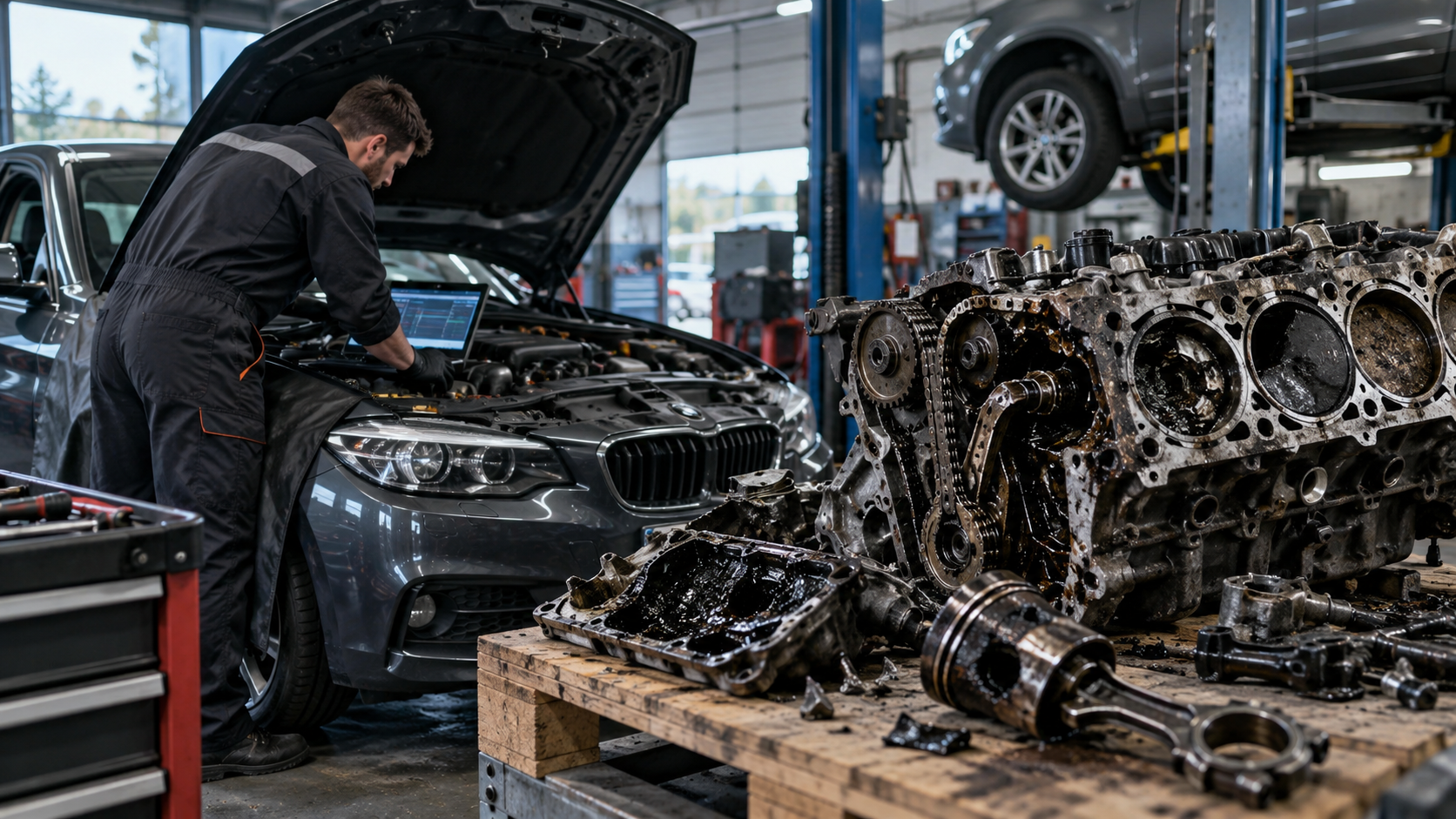
Reconditioned engines normally begin with an original engine core. That core may come from a failed vehicle, an exchange programme, a specialist engine supplier or a unit that is suitable for rebuilding but no longer suitable to be sold as a straightforward used engine.
What matters is not where the metal started; what matters is what happens during the rebuild. A reputable supplier should be able to explain the work carried out and the checks completed before the engine is offered for sale or fitting.
| Question | Why It Matters |
|---|---|
| What exactly was replaced? | Two “reconditioned” engines can have very different rebuild depths. |
| Was the block/head machined or only inspected? | This helps you understand whether corrective engineering work was required and completed. |
| Is the engine tested before dispatch or fitting? | Testing provides another quality-control layer beyond visual inspection. |
| Is the exact engine code confirmed? | The correct code can be critical for fitment, sensors, ECU compatibility and ancillaries. |
| What does the warranty require? | Some warranties depend on professional fitting, servicing, replacement of related parts or documented maintenance. |
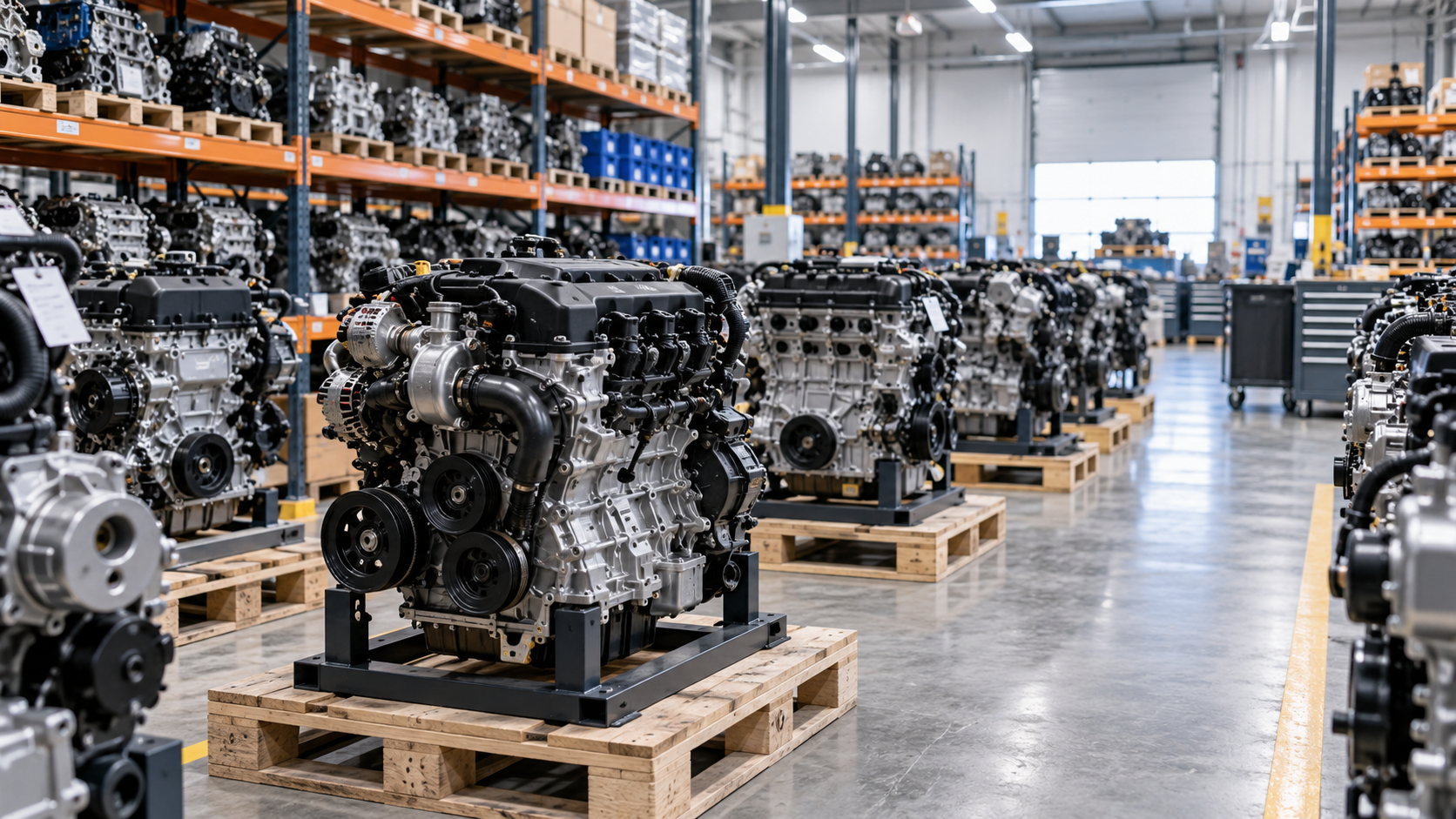
Engine failure is not limited to one type of vehicle. Our supplier network handles enquiries across everyday hatchbacks, family saloons, SUVs, premium cars, MPVs and commercial vans. Common UK demand includes engines for Ford, Vauxhall, Volkswagen, Audi, BMW, Mercedes-Benz, Nissan, Toyota, Peugeot, Citroen, Renault, Mazda, Kia, Hyundai, SEAT, Skoda, Land Rover and Range Rover vehicles, alongside many other makes.
The important part is not the badge on the bonnet; it is matching the exact engine fitted to the vehicle. A single model name can cover several engine generations, power outputs and codes. That is why registration details, year, fuel type, engine size and engine code all help suppliers return more accurate quotes.
| Vehicle Type | Typical Buyer Priority | Why Reconditioned Appeals |
|---|---|---|
| Hatchback / family saloon | Keep repair sensible against vehicle value | Often cheaper than a new-engine route while offering stronger reassurance than used. |
| SUV / 4x4 | Preserve a higher-value vehicle | The value of the vehicle can justify deeper engine work. |
| Premium car | Avoid very high manufacturer replacement costs | Reconditioning can make an otherwise uneconomic dealer-style repair viable. |
| Van / commercial vehicle | Reduce downtime | Supply, fitting and recovery can be coordinated through one network. |
| Petrol or diesel engine | Correct code, correct rebuild | Rebuild work can be tailored around known wear patterns in specific engine families. |
Drivers normally begin looking for a replacement engine after a garage confirms that the original engine has suffered serious internal damage or that the repair cost is approaching the price of a replacement unit.
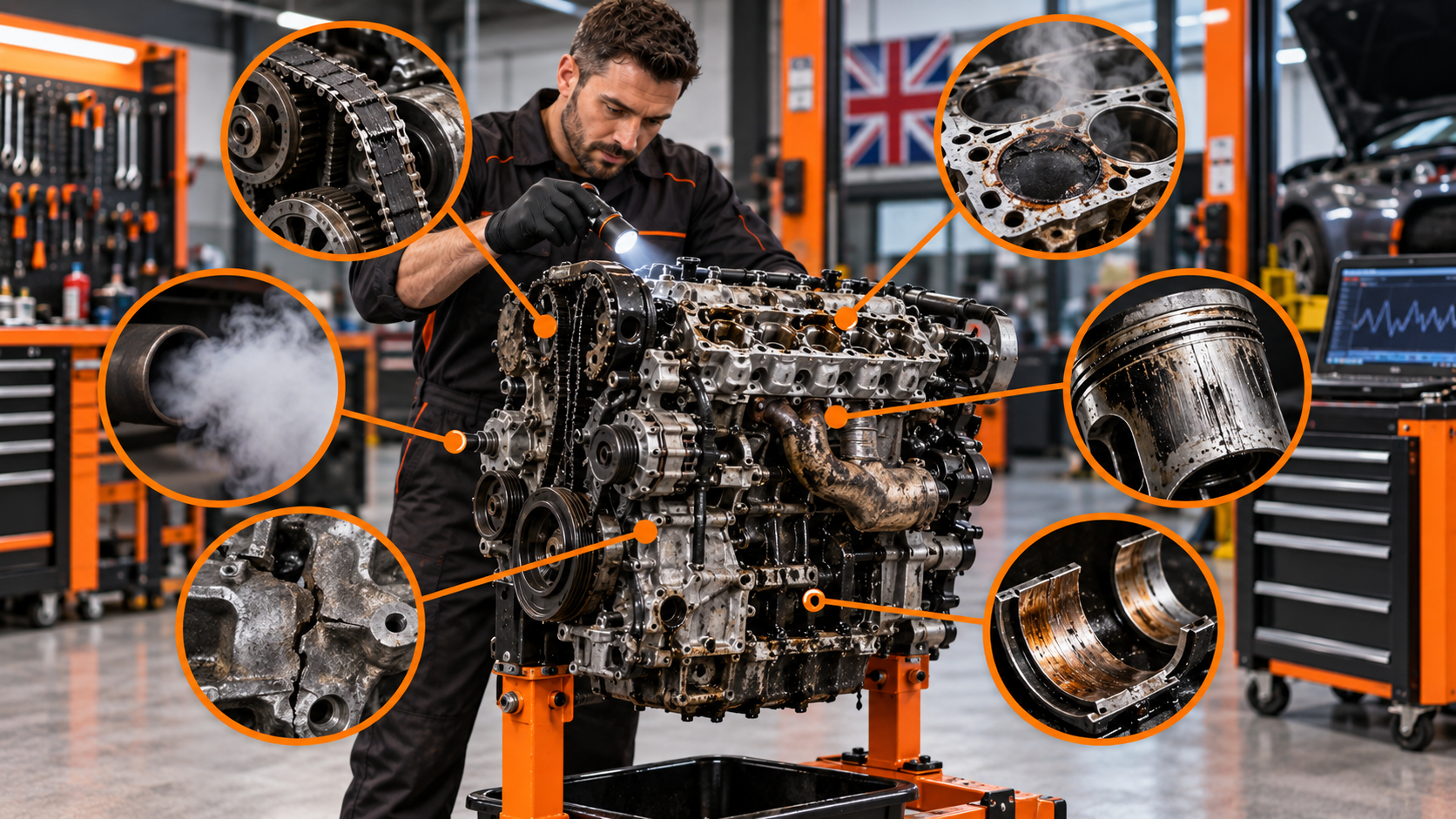
Other triggers include cracked engine components, coolant contamination, turbo failure that has introduced debris into the engine, and severe internal damage following neglected warning signs. The correct repair should always follow diagnosis; a replacement engine should not be used to hide an unresolved cause such as cooling-system or lubrication failure.
A failed timing system can allow valves and pistons to collide. Once damage spreads through the cylinder head or pistons, a full rebuild or replacement engine can become more economical than repairing individual components.
Severe overheating can distort cylinder heads, damage head gaskets, affect bores and compromise lubrication. Repeated overheating is particularly risky because the visible failure may only be part of the damage.
Low oil pressure or loss of lubrication can damage crankshaft surfaces, bearings and turbo-related components. Knocking noises and metal in the oil often point to serious bottom-end wear.
Heavy oil consumption, blue smoke, low compression and poor performance may indicate internal wear that makes a rebuilt engine more attractive than repeated repair attempts.
From the perspective of a multi-supplier engine enquiry network, the market behaves differently from ordinary retail. Drivers are usually making the enquiry after a breakdown, so speed, confidence and logistics matter alongside price. A supplier with a slightly higher engine price but immediate availability, fitting capacity and recovery support may be more useful than a cheaper quote that leaves the driver coordinating several separate businesses.
Network insight: the strongest enquiries include accurate vehicle details from the start—registration, make, model, year, fuel type, engine size and engine code where available. Better vehicle identification produces better supplier matching and reduces wasted quotes.
Because the market changes by engine code and availability, Engines4Sale is designed around comparison rather than a single fixed catalogue price. The value for the customer is seeing different supply and fitting routes side-by-side before committing to a repair.
A reconditioned engine cannot be priced accurately from engine size alone. Two 2.0-litre engines can have completely different parts costs, rebuild complexity and availability. A reliable quote normally begins with the exact engine code and then adds the service level the customer needs.
| Price Driver | How It Changes the Quote |
|---|---|
| Exact engine code | Controls compatibility and the availability of cores, components and rebuild expertise. |
| Rebuild depth | A deeper rebuild with more new components and machining normally costs more but may offer stronger value. |
| Ancillaries | Turbo, injectors, pumps, alternator, starter and other components may be included, transferred or charged separately. |
| Supply only vs supply & fit | Fitting adds labour, consumables, workshop time and often additional checks. |
| Recovery / transport | A non-running vehicle may need recovery to the fitting garage, while supply-only engines require delivery. |
| Warranty | Longer or more comprehensive cover can affect the overall price and value proposition. |
The ranges below are broad buying guides rather than live promises. Actual Engines4Sale quotes should always come from current supplier responses for the exact vehicle and engine code.
| Typical Engine Category | Broad Supply-Only Guide | Why It Varies |
|---|---|---|
| Small mainstream petrol engines | Approx. £1,450–£2,250 | Availability is often better, but rebuild scope and component prices still vary. |
| Popular diesel engines | Approx. £1,950–£3,450 | Diesel parts, injection systems and machining requirements can raise rebuild cost. |
| Premium / SUV / larger-capacity engines | Approx. £2,800–£5,500+ | More complex engines and expensive components can widen the range considerably. |
| Commercial / van engines | Varies widely | Demand, turnaround pressure and engine family have a strong effect. |
These figures are intentionally broad and should not be presented as fixed live prices. Replace them with your own current network averages or database-driven ranges if you want the section to become genuine proprietary pricing data.
| Mistake | Why It Matters | Better Approach |
|---|---|---|
| Buying by make/model alone | A single model can use several different engine codes and specifications. | Confirm registration, year, engine size and exact engine code before committing. |
| Assuming “reconditioned” means the same thing everywhere | Rebuild depth varies dramatically between suppliers. | Ask what was inspected, replaced and machined. |
| Ignoring warranty conditions | A long warranty headline is less useful if the installation conditions are unclear. | Read what is covered, who can fit the engine and what maintenance records are required. |
| Not checking ancillaries | A low quote may exclude the turbo, injectors, manifolds, pumps or other components you expected. | Get the included/excluded parts confirmed in writing. |
| Comparing engine-only cost | Recovery, delivery, labour, fluids and related repair work can change the true total substantially. | Compare the full cost of getting the vehicle back on the road. |
| Ignoring the original cause of failure | A replacement engine can fail again if an unresolved cooling, lubrication or turbo fault remains. | Ask the fitting garage to diagnose and address the cause before commissioning the replacement. |
Make sure you understand the engine code, rebuild scope, included parts, warranty, delivery or recovery, fitting cost and expected turnaround. A clear quote is normally a better sign than a very low number with important details left unanswered.
Clear answers to the questions drivers usually ask before requesting an engine quote.
Browse the replacement engines UK drivers search for most, based on genuine enquiry activity, vehicle demand and real customer interest.
Read genuine reviews from UK drivers who found quality replacement engines through our trusted supplier network.