1
Enter vehicle details
Use your registration or provide the make, model and engine information needed to identify a suitable replacement.
Need an engine after a breakdown or major engine failure? Compare quotes for used and reconditioned engines, supply only or supply and fit, with vehicle recovery available across mainland UK.
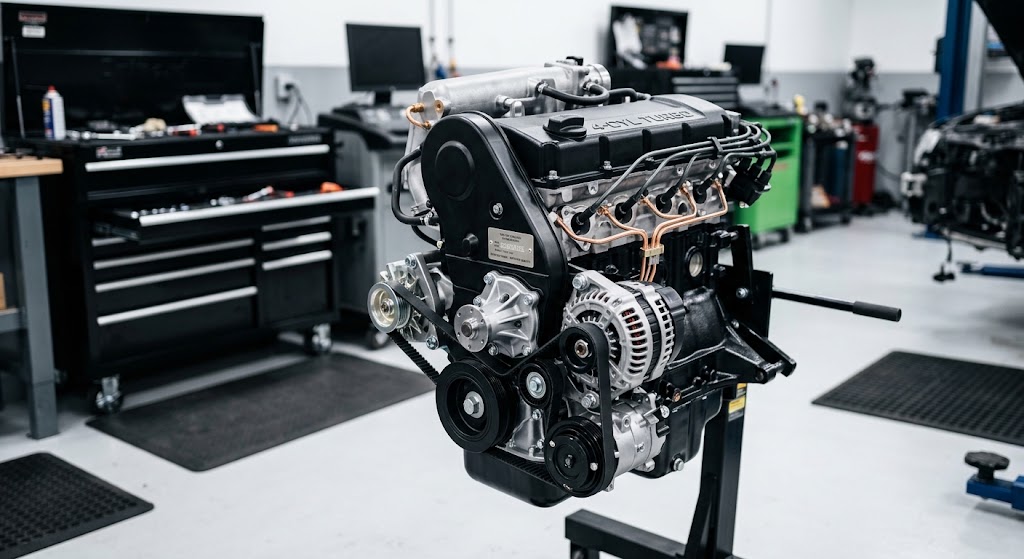
One enquiry can help you compare suitable engine supply and fitting options without contacting garages one by one.
Use your registration or provide the make, model and engine information needed to identify a suitable replacement.
Choose used or reconditioned, then tell us whether you need supply only, fitting or recovery.
Your enquiry can be matched with relevant suppliers and specialist garages with suitable options.
Compare price, engine condition, warranty and service details before deciding which option suits you.
The right choice depends on your vehicle, budget, how long you plan to keep it and what is currently available.
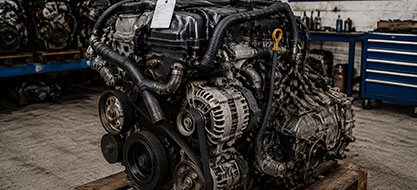
A practical lower-cost option when a compatible engine is available. Selected used engines may include warranty cover of up to 6 months.
Compare used engine quotes →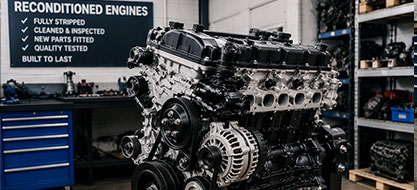
Suitable when you want a rebuilt engine option with greater long-term reassurance. Qualifying engines may include warranty cover up to 3 years.
Compare reconditioned quotes →Browse popular vehicle makes or use your registration above to find a compatible engine faster.
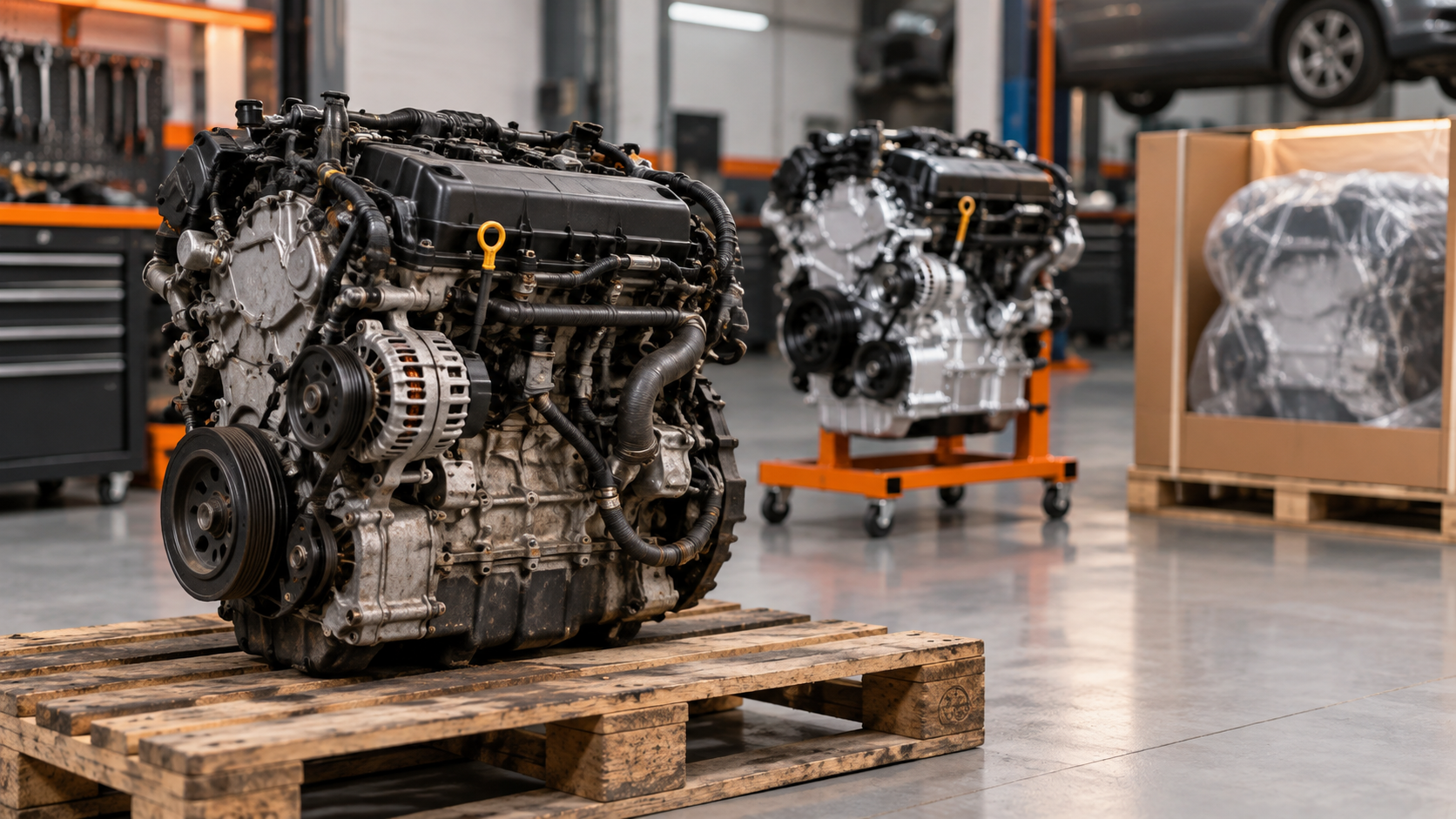
A used engine is an original engine that has already operated in another vehicle and is removed for reuse. It has not normally been stripped down and rebuilt internally in the way a reconditioned engine has. A good used replacement engine is therefore less about making an old unit look new and more about finding the correct, serviceable engine for the exact vehicle specification.
That distinction matters. Two vehicles can share the same model name and engine capacity but use different engine codes, emissions equipment, sensors, manifolds, wiring, turbochargers or ancillaries. A sensible purchase starts with compatibility, not just the words “2.0 diesel” or “1.6 petrol”.
| Option | What You Are Buying | Usually Best For | What to Check |
|---|---|---|---|
| Used engine | A previously run engine removed from another vehicle and sold for reuse. | Drivers wanting a cost-conscious repair and a quicker route back on the road. | Exact engine code, source, condition, mileage evidence where available, warranty and what is included. |
| Reconditioned engine | An engine that has been dismantled and rebuilt to an agreed scope with worn or failed parts repaired or replaced. | Vehicles worth keeping longer, or owners wanting more extensive internal work and potentially longer warranty cover. | What was actually replaced, machining work, rebuild specification, testing and warranty terms. |
| New engine | An unused replacement engine or manufacturer-supplied unit. | Newer/high-value vehicles where maximum originality or manufacturer route is preferred. | Total supplied and fitted price, availability, lead time and whether the cost is proportionate to the vehicle's value. |
A used engine can make particularly strong financial sense when the rest of the vehicle is still useful but repairing the original engine is uneconomical. This is common with everyday family cars, work vans and older vehicles where a brand-new engine would absorb too much of the vehicle's market value.
It may also be the practical option when the driver needs the car back quickly. Rebuilding a damaged engine can involve diagnosis, strip-down, machining, parts ordering, rebuilding and testing. If a compatible used unit is already available, replacement may reduce downtime—subject to workshop capacity, transport and the amount of ancillary work required.
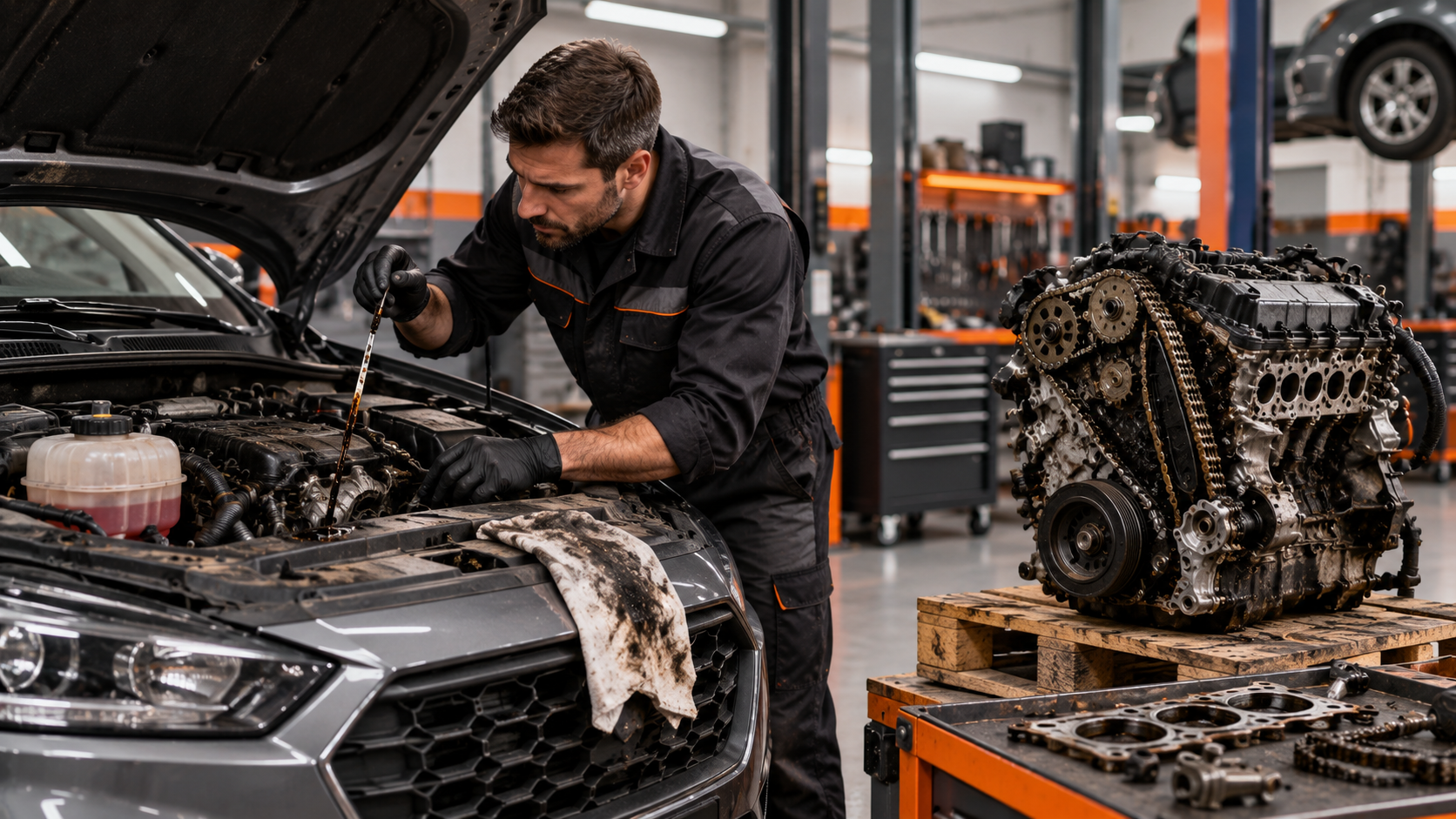
The lowest engine price is not automatically the lowest repair cost. Fitting labour, recovery, fluids, filters, timing components, clutches, turbochargers, injectors and other ancillaries can change the final bill. This is why Engines4Sale encourages motorists to compare the whole job.
Used engines can enter the replacement market from vehicles that have been dismantled for reasons unrelated to the engine itself. For example, a vehicle may be written off after body damage, retired by a fleet, dismantled because another major component failed, or broken for reusable parts. The important question is not simply where an engine came from, but what information and checks support its suitability for reuse.
Suppliers in the Engines4Sale network may use different testing processes, so buyers should always read the individual quotation and warranty terms. A responsible matching process can include checking the engine code, vehicle registration/VIN-related information, fuel type, capacity, production period and relevant component differences before a unit is offered.
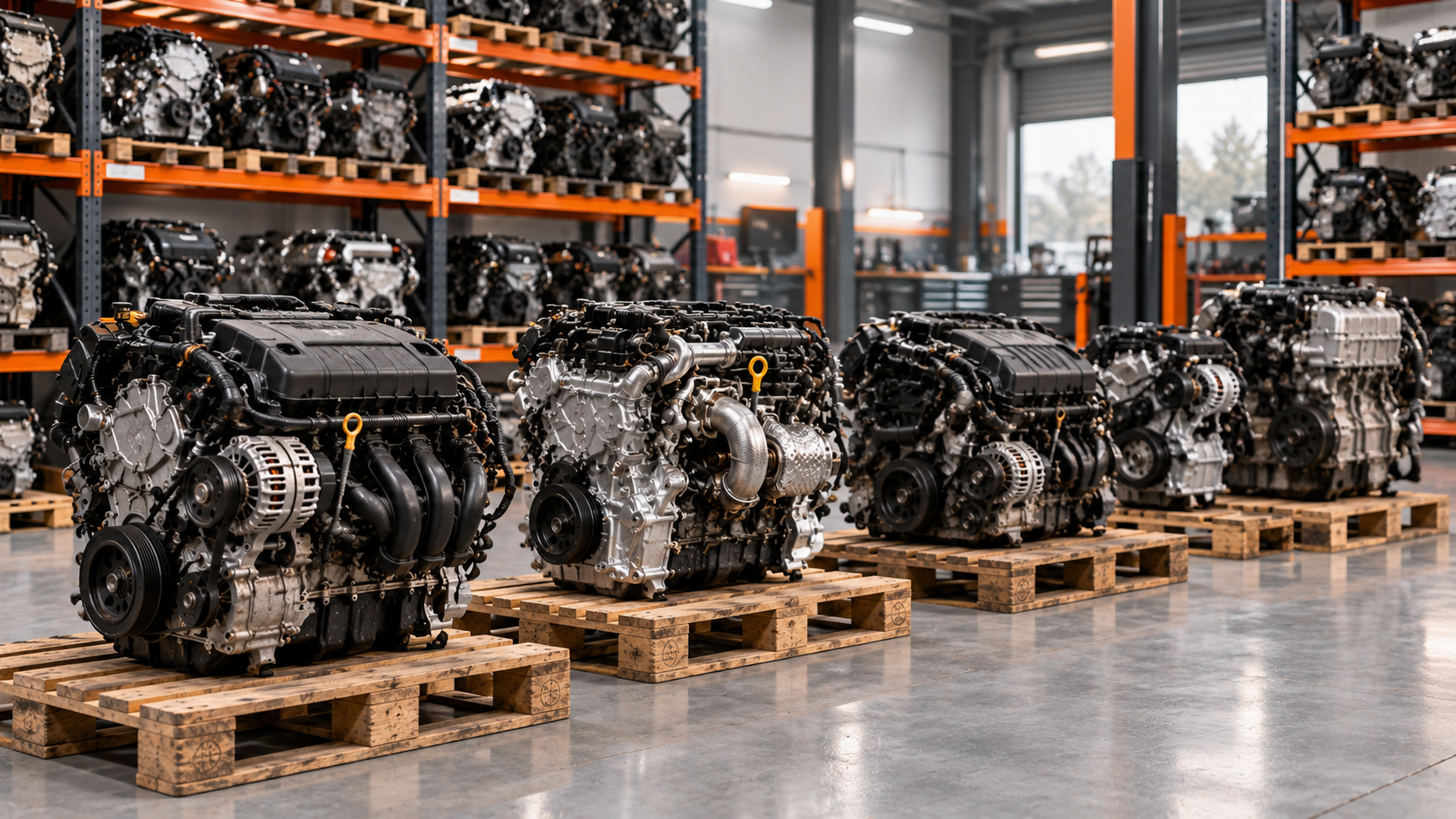
Before agreeing to a replacement engine, make sure the supplier can clearly explain what you are buying, how the engine has been checked and what protection comes with it.
Does the engine code or recognised interchange match your exact vehicle and derivative?
Is mileage or vehicle history available and how has that information been evidenced?
Ask what visual, compression, running or bench checks were completed where applicable.
Check for signs of overheating, cracked casings, contamination, excessive leakage or damaged mounting points.
Confirm whether the quote covers a bare engine, complete engine or an engine supplied with specified ancillaries.
Ask what is covered, how long the warranty lasts and what installation or servicing conditions apply.
A warranty should never replace correct engine matching and installation. Ask for the engine specification and full warranty conditions before fitting begins.
Drivers usually search for a replacement engine after a fault has progressed beyond an economical repair. The exact cause varies by model and engine family, but some failure patterns repeatedly lead owners to compare complete replacement options rather than continuing with piecemeal repairs.
A warning light or unusual noise alone does not prove that a complete engine is required. Proper diagnosis should always come first.
Low oil level, poor oil circulation or lubrication failure can damage crankshaft bearings, camshafts and turbocharged components.
Cooling-system faults can contribute to cylinder-head distortion, head-gasket failure or more serious internal damage.
A failed timing belt, chain, tensioner or guide can allow valve and piston contact on interference engines, sometimes causing extensive internal damage.
Turbo failures can be linked with lubrication problems, debris or oil entering the intake, sometimes causing wider engine damage.
Browse the replacement engines UK drivers search for most, based on genuine enquiry activity, vehicle demand and real customer interest.
Read genuine reviews from UK drivers who found quality replacement engines through our trusted supplier network.