1
Enter vehicle details
Use your registration or provide the make, model and engine information needed to identify a suitable replacement.
Need an engine after a breakdown or major engine failure? Compare quotes for used and reconditioned engines, supply only or supply and fit, with vehicle recovery available across mainland UK.
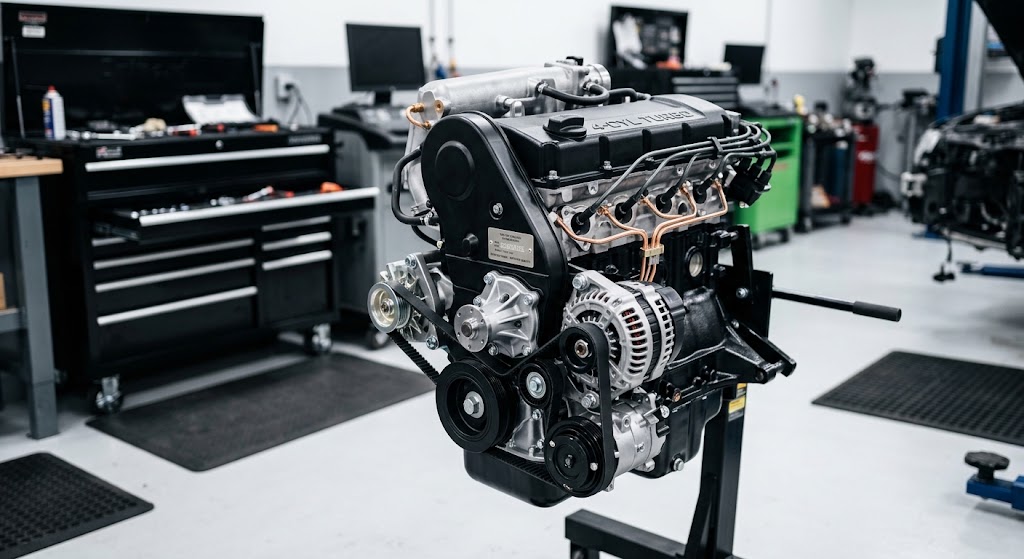
One enquiry can help you compare suitable engine supply and fitting options without contacting garages one by one.
Use your registration or provide the make, model and engine information needed to identify a suitable replacement.
Choose used or reconditioned, then tell us whether you need supply only, fitting or recovery.
Your enquiry can be matched with relevant suppliers and specialist garages with suitable options.
Compare price, engine condition, warranty and service details before deciding which option suits you.
Explore quality used and reconditioned replacement engines, with expert guidance to help you find the right fit for your vehicle.
Select your Ford Transit engine size to find the right replacement engine for your vehicle.
The right choice depends on your vehicle, budget, how long you plan to keep it and what is currently available.
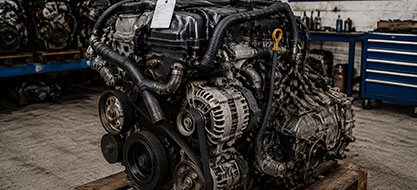
A practical lower-cost option when a compatible engine is available. Selected used engines may include warranty cover of up to 6 months.
Compare used engine quotes →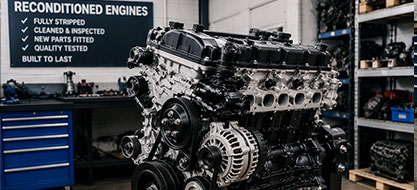
Suitable when you want a rebuilt engine option with greater long-term reassurance. Qualifying engines may include warranty cover up to 3 years.
Compare reconditioned engine quotes →Browse the replacement engines UK drivers search for most, based on genuine enquiry activity, vehicle demand and real customer interest.
Quick answer: A used replacement engine can make sense for a Ford Transit when the original unit has suffered genuine internal damage but the rest of the vehicle is still worth keeping. The important part is not finding the first engine advertised; it is identifying the right engine family, understanding its known weak points and comparing the complete supply-and-fitting route.
Ford diesels in these models can include 1.6 TDCi/DV6, 1.8 Duratorq, 2.0 TDCi/DW10-derived units and larger Transit/Ranger diesels depending on application. That means a seller advertising only a 'Transit engine' has not given enough information. The code on the original engine or VIN-linked vehicle data should decide the match.
For example, a Focus 1.6 TDCi and a Focus 2.0 TDCi have different engine families and known service concerns; even within 1.6 TDCi, the exact code and emissions generation matter.
On 1.6 TDCi engines, turbo oil-feed cleanliness, injector sealing, EGR and DPF history are important; on 2.0 TDCi and van diesels, also check boost control, fuel-pressure faults and service history.
Use those points to question the donor engine rather than to assume your original Ford Transit failed in the same way. The fitting garage still needs to establish the cause of the first engine's failure.
As a van or light-commercial vehicle, Ford Transit is often bought to earn its keep. Engine availability, workshop capacity and the date it can return to work may matter as much as the engine-only price.
Reasons a Ford Transit owner may reach the replacement stage include loss of compression, heavy crankcase pressure, persistent oil consumption, low oil pressure, internal knocking, turbo failure that has contaminated the engine, or serious damage following overheating or timing failure.
If the body, gearbox, suspension and electronics are generally sound, engine replacement can preserve a vehicle you already know. If the car also needs major gearbox, rust or electrical work, the total repair can become harder to justify. Use the fitted quote as part of that wider decision.
For a used Ford Transit engine, ask what evidence exists behind the condition claim: donor information, recorded mileage, running video, compression figures, oil-pressure test or inspection notes. Not every supplier can provide every item, but the answer should be specific.
Two Ford Transit engines with the same code can still be priced differently because of mileage evidence, donor condition, included ancillaries and warranty. Compare what you are actually receiving rather than only the number in the advert.
Depending on the actual job and supplier quotes, an independent used-engine route can save up to 40% against some main-dealer replacement options. Treat that as a possible comparison, not a guaranteed discount.
Ask the supplier to write the proposed engine code on the quote. For Ford Transit, that one detail helps expose a mismatch before money changes hands, particularly where the same capacity was sold in several power or emissions versions.
Ask the fitter what root-cause checks are included. On Ford Transit, a failed turbo, injector, oil cooler, blocked DPF or cooling fault can damage a replacement engine if the surrounding system is simply reused without investigation.
A fitted quote should state who supplies the engine, who fits it and who handles a warranty issue. That division of responsibility matters more than it first appears if a problem develops after installation.
Warranty is supplier-specific. Some used engines can include up to 6 months cover, but the useful details are what is covered, what maintenance the buyer must prove and who pays removal/refitting labour if a valid claim occurs.
Engines4Sale is designed around comparison rather than a single stock list. That is useful for Ford Transit, because engine code, location, fitting requirement and urgency can all change which supplier is the best practical match.
A useful Ford Transit quote should identify the proposed engine, what is included with it, the fitting labour, VAT/delivery, recovery if required and the written warranty. That makes different offers genuinely comparable.
For a working Ford Transit, ask the supplier to give you both engine availability and a realistic workshop slot. A unit sitting on a pallet is not useful if the van cannot be fitted for another two weeks.
Learn what to check before buying a replacement engine, from compatibility and mileage to warranties, delivery options and supplier reliability.
Understand the factors that change engine supply and fitting prices.
See UK Engine Prices →
Compare cost, condition, intended use and warranty considerations.
See UK Engine Prices →
Learn why the right engine identification matters before ordering.
See UK Engine Prices →Ford diesels in these models can include 1.6 TDCi/DV6, 1.8 Duratorq, 2.0 TDCi/DW10-derived units and larger Transit/Ranger diesels depending on application. The exact engine still depends on model year, output and engine code. Use the VRM/VIN and the original engine code to confirm the correct Ford Transit unit before ordering.
On 1.6 TDCi engines, turbo oil-feed cleanliness, injector sealing, EGR and DPF history are important; on 2.0 TDCi and van diesels, also check boost control, fuel-pressure faults and service history. These are areas to investigate, not proof that every Ford Transit develops the same fault. The donor engine should be assessed on its own history and test evidence.
The engine code identifies the actual engine specification more accurately than the Transit badge or engine capacity alone. On Ford Transit, it helps distinguish different outputs, generations, fuel systems and emissions hardware that may not be interchangeable.
Recovery may be available across mainland UK, subject to location, access and vehicle type. Provide the collection postcode and say whether Ford Transit rolls, steers and can be loaded normally.
Selected used engines may be offered with warranty cover of up to 6 months, depending on the supplier and unit. Check mileage limits, servicing requirements, excluded ancillaries, overheating/lubrication exclusions and whether labour is covered.
Send the registration, VIN if available, model year, fuel type, engine size, engine code, postcode and the garage diagnosis. Also state whether you need supply only, fitting, or recovery plus fitting for Ford Transit.
Read genuine reviews from UK drivers who found quality replacement engines through our trusted supplier network.