1
Enter vehicle details
Use your registration or provide the make, model and engine information needed to identify a suitable replacement.
Need an engine after a breakdown or major engine failure? Compare quotes for used and reconditioned engines, supply only or supply and fit, with vehicle recovery available across mainland UK.
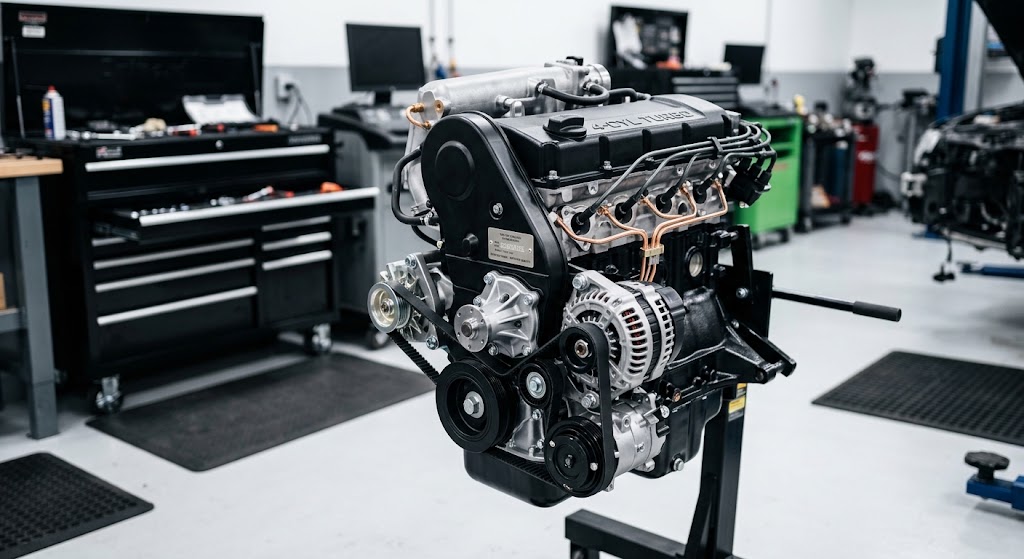
One enquiry can help you compare suitable engine supply and fitting options without contacting garages one by one.
Use your registration or provide the make, model and engine information needed to identify a suitable replacement.
Choose used or reconditioned, then tell us whether you need supply only, fitting or recovery.
Your enquiry can be matched with relevant suppliers and specialist garages with suitable options.
Compare price, engine condition, warranty and service details before deciding which option suits you.
Explore quality used and reconditioned replacement engines, with expert guidance to help you find the right fit for your vehicle.
Select your Range Rover Mk III Diesel engine size to find the right replacement engine for your vehicle.
The right choice depends on your vehicle, budget, how long you plan to keep it and what is currently available.
A practical lower-cost option when a compatible engine is available. Selected used engines may include warranty cover of up to 6 months.
Compare used engine quotes →
Suitable when you want a rebuilt engine option with greater long-term reassurance. Qualifying engines may include warranty cover up to 3 years.
Compare reconditioned quotes →Browse the replacement engines UK drivers search for most, based on genuine enquiry activity, vehicle demand and real customer interest.
Quick answer: A used replacement engine can make sense for a Range Rover Mk III Diesel when the original unit has suffered genuine internal damage but the rest of the vehicle is still worth keeping. The important part is not finding the first engine advertised; it is identifying the right engine family, understanding its known weak points and comparing the complete supply-and-fitting route.
These Land Rover/Range Rover diesel generations commonly use 2.7 TDV6 or 3.0 TDV6/SDV6 engines, with some Range Rover variants using 4.4 TDV8. That means a seller advertising only a 'Mk III engine' has not given enough information. The code on the original engine or VIN-linked vehicle data should decide the match.
For example, a Range Rover 3.0 TDV6/SDV6 and a later 2.0 Ingenium diesel require different matching and failure-history checks despite belonging to the same marque.
On a diesel Range Rover Mk III Diesel, DPF or EGR faults alone do not automatically mean the engine is ruined. Replacement becomes more likely when diagnostics also show internal damage, poor compression, oil starvation, bearing noise or cylinder/head damage.
A sensible engine replacement decision looks at the whole vehicle. A strong chassis and gearbox can make a used engine worthwhile; multiple unrelated major faults can change the economics. Ask for a complete fitted estimate before committing.
A meaningful used-engine description should cover donor mileage/history where available, visible damage or leaks, oil/coolant condition, compression or running checks if performed, and what ancillaries are included. Photographs of the actual unit are preferable to stock images.
Check crank/bottom-end and lubrication history on TDV6/SDV6 engines, turbo condition, EGR systems, cooling and timing-belt service; precise engine and driveline specification is critical.
These are inspection priorities, not proof that every Range Rover Mk III Diesel develops the same fault. The donor engine still needs to be judged on its own code, history and test evidence.
Premium models such as Range Rover Mk III Diesel can use several engines and outputs under similar badges. Electronics, emissions hardware and ancillaries may differ, so code-level matching and a workshop with the right diagnostic capability are important.
If the engine code is unknown, give the supplier the VRM and VIN and ask them to cross-check it before dispatch. Do not rely on photographs or 'same size engine' matching for Range Rover Mk III Diesel.
Ask the fitter what root-cause checks are included. On Range Rover Mk III Diesel, a failed turbo, injector, oil cooler, blocked DPF or cooling fault can damage a replacement engine if the surrounding system is simply reused without investigation.
A fitted quote should state who supplies the engine, who fits it and who handles a warranty issue. That division of responsibility matters more than it first appears if a problem develops after installation.
A written warranty should identify the covered engine, start date, duration, claim process and installation conditions. Selected used engines may be offered with up to 6 months cover, subject to supplier terms.
The price of a used Range Rover Mk III Diesel engine moves with the exact code, scarcity, donor mileage/condition, whether ancillaries are included and whether you want supply only or a fitted package. Delivery, fluids, timing parts and recovery can change the final bill.
Some buyers can see savings of up to 40% versus certain main-dealer engine replacement routes, but the useful number is the final like-for-like fitted price for this vehicle.
One accurate enquiry can save repeated phone calls. Engines4Sale uses the Range Rover Mk III Diesel details to connect the requirement with relevant engine suppliers and garages serving mainland UK.
For Range Rover Mk III Diesel, ask the quote to state the engine code, donor mileage/history where available, included ancillaries, VAT, delivery, fitting, fluids, recovery, warranty length and any parts the installer recommends replacing during the swap.
For Range Rover Mk III Diesel, clarify which original ancillaries will be transferred and whether the donor engine's sensors, turbo or manifolds are included. Premium-model parts differences can materially change the job.
Learn what to check before buying a replacement engine, from compatibility and mileage to warranties, delivery options and supplier reliability.
Understand the factors that change engine supply and fitting prices.
See UK Engine Prices →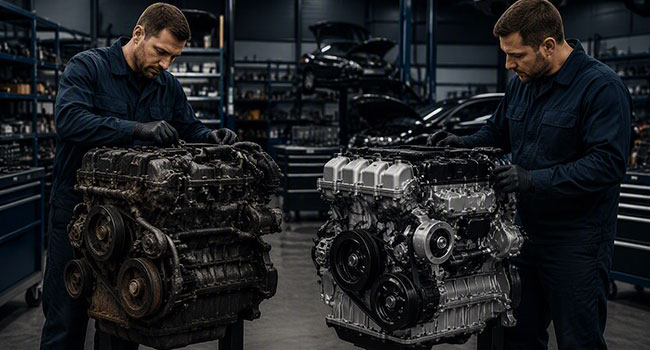
Compare cost, condition, intended use and warranty considerations.
See UK Engine Prices →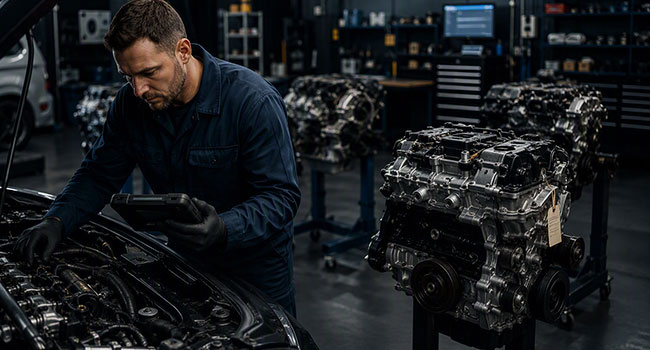
Learn why the right engine identification matters before ordering.
See UK Engine Prices →These Land Rover/Range Rover diesel generations commonly use 2.7 TDV6 or 3.0 TDV6/SDV6 engines, with some Range Rover variants using 4.4 TDV8. The exact engine still depends on model year, output and engine code. Use the VRM/VIN and the original engine code to confirm the correct Range Rover Mk III Diesel unit before ordering.
Check crank/bottom-end and lubrication history on TDV6/SDV6 engines, turbo condition, EGR systems, cooling and timing-belt service; precise engine and driveline specification is critical. These are areas to investigate, not proof that every Range Rover Mk III Diesel develops the same fault. The donor engine should be assessed on its own history and test evidence.
The engine code identifies the actual engine specification more accurately than the Mk III Diesel badge or engine capacity alone. On Range Rover Mk III Diesel, it helps distinguish different outputs, generations, fuel systems and emissions hardware that may not be interchangeable.
Yes. If oil starvation, overheating, turbo debris, a failed injector or another external fault damaged the original Range Rover Mk III Diesel engine, the same unresolved problem can damage the replacement. Ask the fitter how the root cause will be checked before commissioning.
Useful evidence includes donor registration or vehicle details where available, supported mileage, running video, compression or oil-pressure results if tested, inspection notes, photos of the actual engine and a written list of included parts.
Ask for the actual engine code, donor mileage or history where available, how the unit was checked, whether it was heard running or compression-tested, and exactly which ancillaries are included. For Range Rover Mk III Diesel, also check the family-specific weak points described on this page.
Read genuine reviews from UK drivers who found quality replacement engines through our trusted supplier network.