1
Enter vehicle details
Use your registration or provide the make, model and engine information needed to identify a suitable replacement.
Need an engine after a breakdown or major engine failure? Compare quotes for used and reconditioned engines, supply only or supply and fit, with vehicle recovery available across mainland UK.
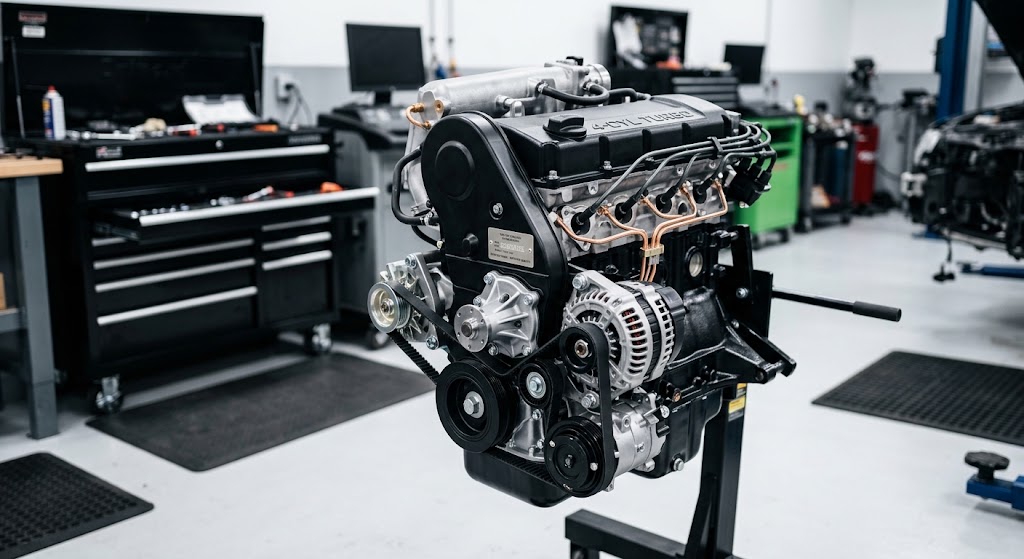
One enquiry can help you compare suitable engine supply and fitting options without contacting garages one by one.
Use your registration or provide the make, model and engine information needed to identify a suitable replacement.
Choose used or reconditioned, then tell us whether you need supply only, fitting or recovery.
Your enquiry can be matched with relevant suppliers and specialist garages with suitable options.
Compare price, engine condition, warranty and service details before deciding which option suits you.
Explore quality used and reconditioned replacement engines, with expert guidance to help you find the right fit for your vehicle.
Select your Range Rover IV Diesel engine size to find the right replacement engine for your vehicle.
The right choice depends on your vehicle, budget, how long you plan to keep it and what is currently available.
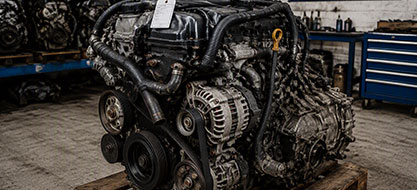
A practical lower-cost option when a compatible engine is available. Selected used engines may include warranty cover of up to 6 months.
Compare used engine quotes →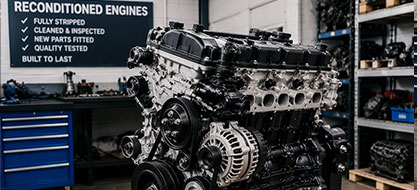
Suitable when you want a rebuilt engine option with greater long-term reassurance. Qualifying engines may include warranty cover up to 3 years.
Compare reconditioned quotes →Browse the replacement engines UK drivers search for most, based on genuine enquiry activity, vehicle demand and real customer interest.
Quick answer: If your Range Rover IV Diesel has suffered internal engine failure, reconditioning can be worth comparing with a used engine or vehicle replacement. The strongest quote is the one that explains exactly what has been rebuilt and how the installer will prevent a repeat failure. Engines4Sale.co.uk helps UK drivers compare reconditioned Range Rover IV Diesel engine options, including supply only, supplied-and-fitted and recovery with fitting where available.
These Land Rover/Range Rover diesel generations commonly use 2.7 TDV6 or 3.0 TDV6/SDV6 engines, with some Range Rover variants using 4.4 TDV8.
The engine code identifies the actual engine specification more accurately than the IV Diesel badge or engine capacity alone. On Range Rover IV Diesel, it helps distinguish different outputs, generations, fuel systems and emissions hardware that may not be interchangeable. For a rebuilt replacement, confirm that identity before the core is supplied because ancillaries, sensors, emissions hardware and calibration can differ within the same model.
Reconditioned does not mean every component is automatically new. It should mean the important internal parts have been inspected against tolerances, with machining and replacement work carried out as necessary before controlled reassembly.
SUV and 4x4 applications can combine heavy vehicle weight, towing and complex driveline layouts. The installer should match the engine specification exactly and check cooling, turbo and drivetrain-related ancillaries before commissioning.
Check crank/bottom-end and lubrication history on TDV6/SDV6 engines, turbo condition, EGR systems, cooling and timing-belt service; precise engine and driveline specification is critical.
The rebuild specification should respond to the known inspection areas rather than follow a generic one-size-fits-all process:
A professional rebuilder should be able to explain the measured condition of the core. Depending on wear, work may include head testing, surface checks, crank/bore measurement, honing or machining, valve work and renewal of bearings, rings, seals or gaskets where required. The scope should follow measurements, not a cosmetic checklist.
A reconditioned engine does not remove the original cause of failure. The installer should investigate the surrounding lubrication, cooling, fuel, turbo and emissions systems before the replacement is commissioned.
The installer should also follow the supplier's priming, fluid and first-start procedure and retain fitting/service evidence needed by the warranty.
Use the VRM or VIN and confirm the original engine code, model year, fuel type, output and gearbox. Identification on the old block or workshop records can provide a second check; the model badge alone is not enough.
Service choice should be part of the quote. Engine-only supply leaves installation with your garage; a fitted package combines the unit and labour; and recovery can be requested when the vehicle is not driveable.
For a non-running Range Rover IV Diesel, provide the collection postcode and loading/access details. A fitted quote should state who supplies the engine, who installs it and who handles a warranty issue.
Warranty can reach up to 3 years on selected reconditioned engines, depending on the supplier and unit. Read the written claim conditions, servicing requirements and exclusions before installation.
Reconditioned-engine pricing changes with the exact engine code, condition of the rebuildable core, machining required, parts replaced, included ancillaries, delivery, fitting labour and warranty.
Some owners may save up to 40% versus certain main-dealer engine replacement routes. Compare the complete fitted totals because the actual difference depends on the engine and work required.
Compare the same items: engine code, machining, internal parts, ancillaries, VAT, delivery, fitting, recovery and warranty. A cheaper quote may simply cover less work.
Choose on engine compatibility, measured rebuild work, root-cause checks, fitting quality and written warranty rather than paint finish or the lowest figure.
Engines4Sale lets UK drivers submit the Range Rover IV Diesel requirement once and compare relevant supply, fitting and recovery options from independent suppliers.
Learn what to check before buying a replacement engine, from compatibility and mileage to warranties, delivery options and supplier reliability.
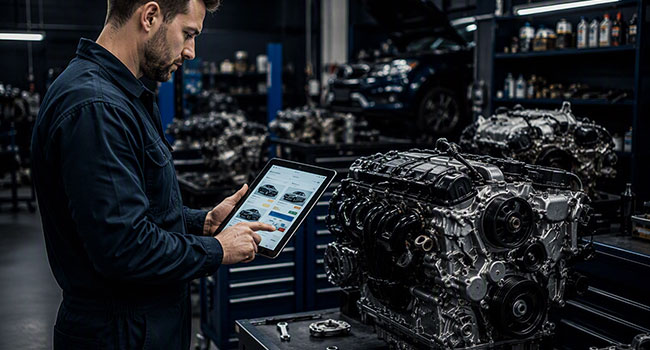
Understand the factors that change engine supply and fitting prices.
See UK Engine Prices →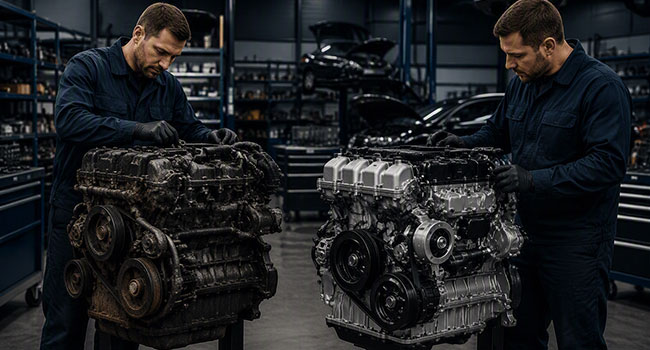
Compare cost, condition, intended use and warranty considerations.
See UK Engine Prices →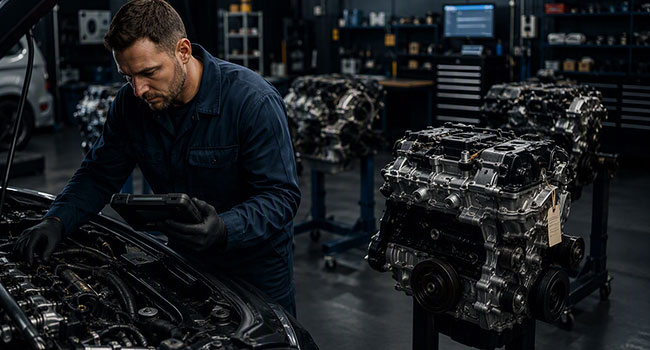
Learn why the right engine identification matters before ordering.
See UK Engine Prices →A proper reconditioning process should involve strip-down, cleaning and dimensional inspection, followed by machining and replacement of worn or damaged parts where required. Ask for the actual rebuild specification because suppliers do not all use one identical process.
These Land Rover/Range Rover diesel generations commonly use 2.7 TDV6 or 3.0 TDV6/SDV6 engines, with some Range Rover variants using 4.4 TDV8. Confirm the VRM/VIN, original engine code, model year and output before ordering; similar-capacity engines are not automatically interchangeable.
Check crank/bottom-end and lubrication history on TDV6/SDV6 engines, turbo condition, EGR systems, cooling and timing-belt service; precise engine and driveline specification is critical. A rebuilder should use those known inspection areas to guide measurements and machining rather than applying a generic checklist.
Yes. Cooling, lubrication, turbo, injector, fuel-system, EGR or DPF faults can sit outside the long block and may damage a rebuilt engine if they are not corrected before commissioning.
Yes, if you already have a suitable installer. Ask the engine supplier which ancillaries must be transferred, what commissioning procedure is required and what fitting evidence is needed to protect the warranty.
Some reconditioned units may carry warranty cover of up to 3 years, depending on the engine and supplier. Compare the written conditions, not just the duration, particularly servicing and labour responsibility.
Read genuine reviews from UK drivers who found quality replacement engines through our trusted supplier network.